
Disclosure: Some links in this article may be affiliate links. This means we may earn a commission if you click and make a purchase, at no additional cost to you. Read full disclosure here.
More traffic, more growth — that's the goal, right?
You're not alone — 61% of marketers consider traffic growth their top priority.
Google processes 8.5 billion searches every day, and organic search accounts for over 53% of all website traffic. But Google isn't the only way to grow — the sites gaining the most traffic right now are combining SEO with community platforms, email, content partnerships, and AI search channels that most competitors haven't figured out yet.
The best part? Most of these strategies are completely free.
So today's guide explores 12 proven strategies — from quick wins to advanced tactics, all data-backed — to help you attract more of the RIGHT visitors to your website. Let's get into it.
1. Content is King (and Queen!) — But Not All Content is Equal
The phrase "content is king" might seem outdated, but its core message remains more relevant than ever — just with a new caveat.
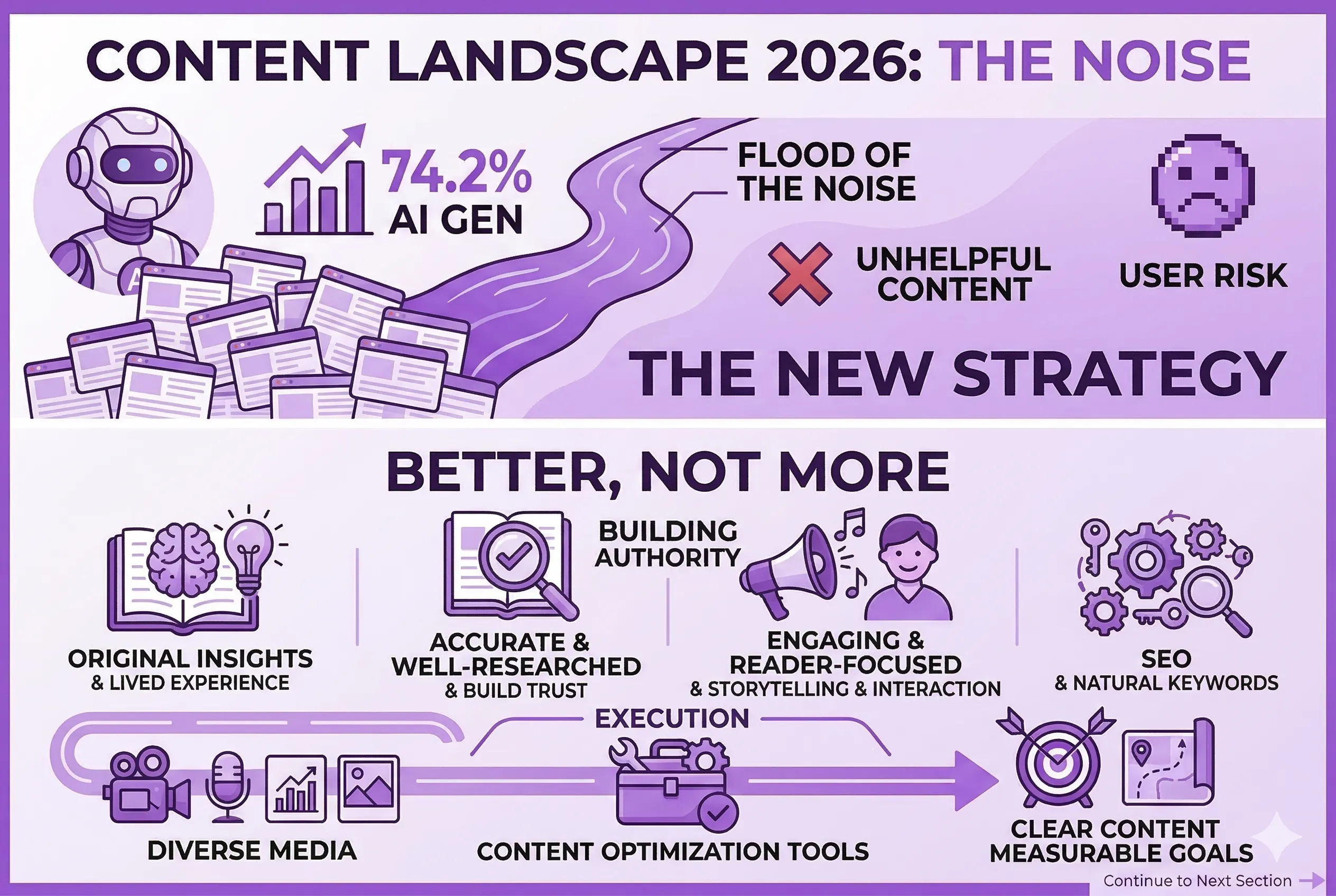
Here's the reality in 2026: 74.2% of new webpages now include AI-generated content . The web has never been more flooded. The problem isn't that people are using AI to create content — it's that most of it is being published without any real value added on top.
Generic, surface-level posts that say the same things in the same way. No original insight. No lived experience. Nothing a reader couldn't have gotten from five other articles.
Google has noticed. Its Helpful Content system is specifically designed to identify and deprioritize content that exists to rank rather than to genuinely help. Google does not penalize content for being created with AI — it penalizes content that is low-quality, unhelpful, or lacking originality, regardless of how it was produced.
That's the gap you need to occupy. Not more content — better content.
Focus on crafting SEO optimized content that is:
- Original and insightful, offering something fresh that users can't find elsewhere.
- Accurate and well-researched, providing credible information that builds trust.
- Engaging and reader-focused, using storytelling techniques and interactive elements to capture attention.
- Optimized for relevant keywords, but in a natural way that prioritizes user experience.
Consider using diverse formats like video, audio, interactive tools, and visual elements to cater to different learning styles and preferences. Using the right content optimization tools can help you identify gaps and improve every piece before you publish. Tie all of this together with a clear content marketing strategy, without one, even great content gets published without direction or promotion.
Let's move to our next way of increasing website traffic.
2. Build Topical Authority — Not Just Individual Posts
If there's one shift that separates high-traffic sites from struggling ones in 2026, it's this: Google no longer just rewards good individual posts. It rewards websites that demonstrate comprehensive expertise across an entire topic area.
This concept — topical authority — means covering your subject in depth and breadth, so that search engines (and readers) recognize you as the definitive source on a topic, not just someone who wrote one decent article about it.
-
Create topic clusters: Choose 5-8 core topics central to your niche. For each one, write a comprehensive pillar page (2,000+ words covering the topic broadly), then support it with a series of in-depth posts covering specific subtopics in detail.
-
Build internal links deliberately: Every supporting post should link back to its pillar page, and the pillar page should link out to its supporting posts. This signals to Google that these pages are semantically related.
-
Cover a topic until there are no obvious gaps: Use keyword research tools like Ahrefs' Content Gap or Google's 'People Also Ask' results to find subtopics you haven't addressed yet. Fill them.
-
Demonstrate E-E-A-T: Google's on-page SEO quality guidelines emphasize Experience, Expertise, Authoritativeness, and Trustworthiness. Add author bios with credentials, cite primary sources, include original data or case studies where possible, and keep your content accurate and up to date.
Why it matters: Sites with strong topical authority rank for more keywords with less individual effort. You're building compounding SEO equity, not just one-off wins.
3. Target Search Intent Precisely
Keyword research is table stakes. Matching search intent is what separates content that ranks from content that doesn't.
Search intent refers to what the user actually wants when they type a query — and Google has become extremely sophisticated at detecting whether your content satisfies it. There are four types:
-
Informational: The user wants to learn something ("how does compound interest work")
-
Navigational: The user is looking for a specific site or brand ("Ahrefs login")
-
Commercial: The user is researching before buying ("best project management tools 2026")
-
Transactional: The user is ready to act ("buy standing desk online")
Before writing any piece of content, search your target keyword and study the top 5 results. What format are they using — listicle, how-to guide, comparison, video? What questions do they answer? What do they not cover? Your content needs to match the dominant intent and go deeper.
Understanding Google ranking factors helps you see exactly how intent alignment influences where your content appears in search results.
Pro tip: If you're targeting a keyword and the top results are all 'best X' comparison posts, writing a general informational article won't rank — regardless of its quality. Intent alignment is non-negotiable.
4. Online Communities: Quora, Medium, Reddit, and Beyond
Most traffic guides treat Quora and Medium as an afterthought. That's a mistake — and increasingly, so is ignoring Reddit and niche online communities entirely.
Together, these platforms represent one of the most underutilized traffic channels available to content creators: massive, search-indexed audiences actively looking for answers, where a single well-placed contribution can drive referral traffic for years.
The numbers back this up. Quora has surpassed 430 million monthly active users as of 2026 , Medium draws over 105 million monthly views worldwide , and Reddit attracts over 97 million daily active users — with a combined reach that rivals most social networks. Crucially, over 74% of Quora's traffic comes from organic search , meaning your answers don't just reach platform users — they surface in Google results for months and years after posting.
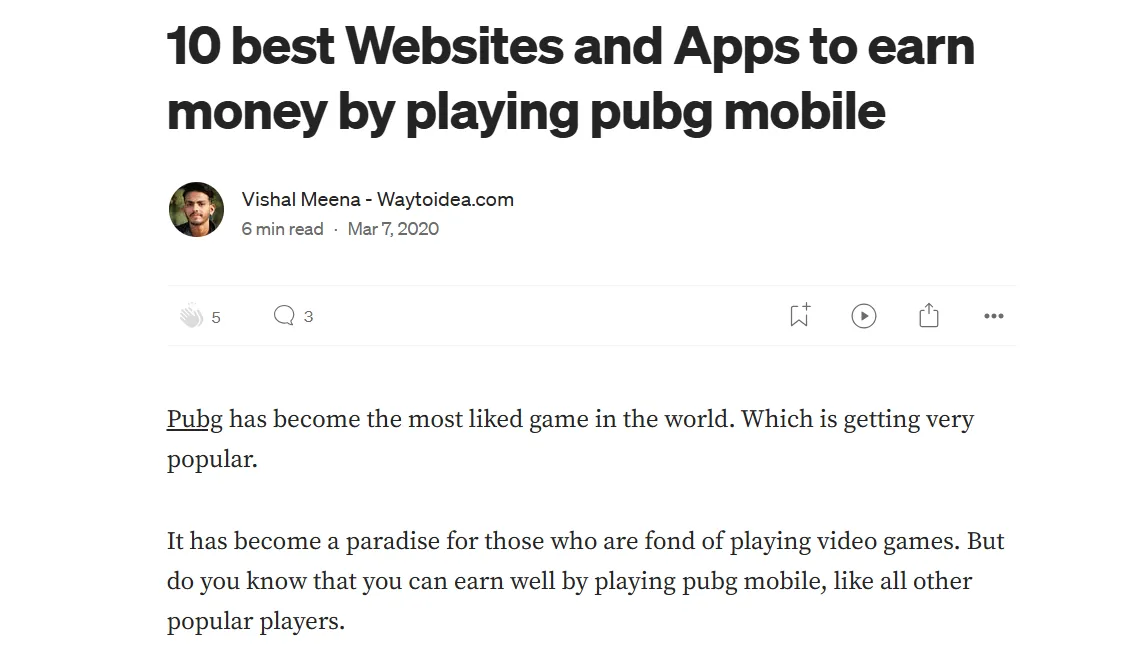
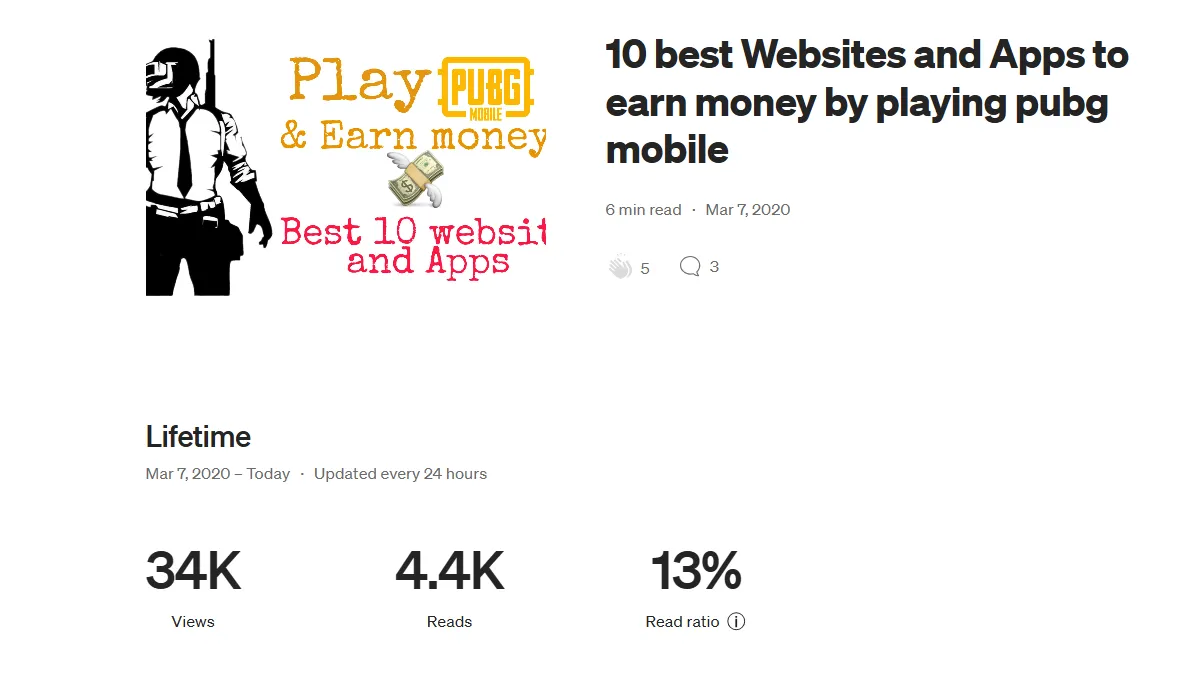
The author's first Medium post — published in 2020 and still generating referral traffic today with over 34,000 views.
Traffic sources:
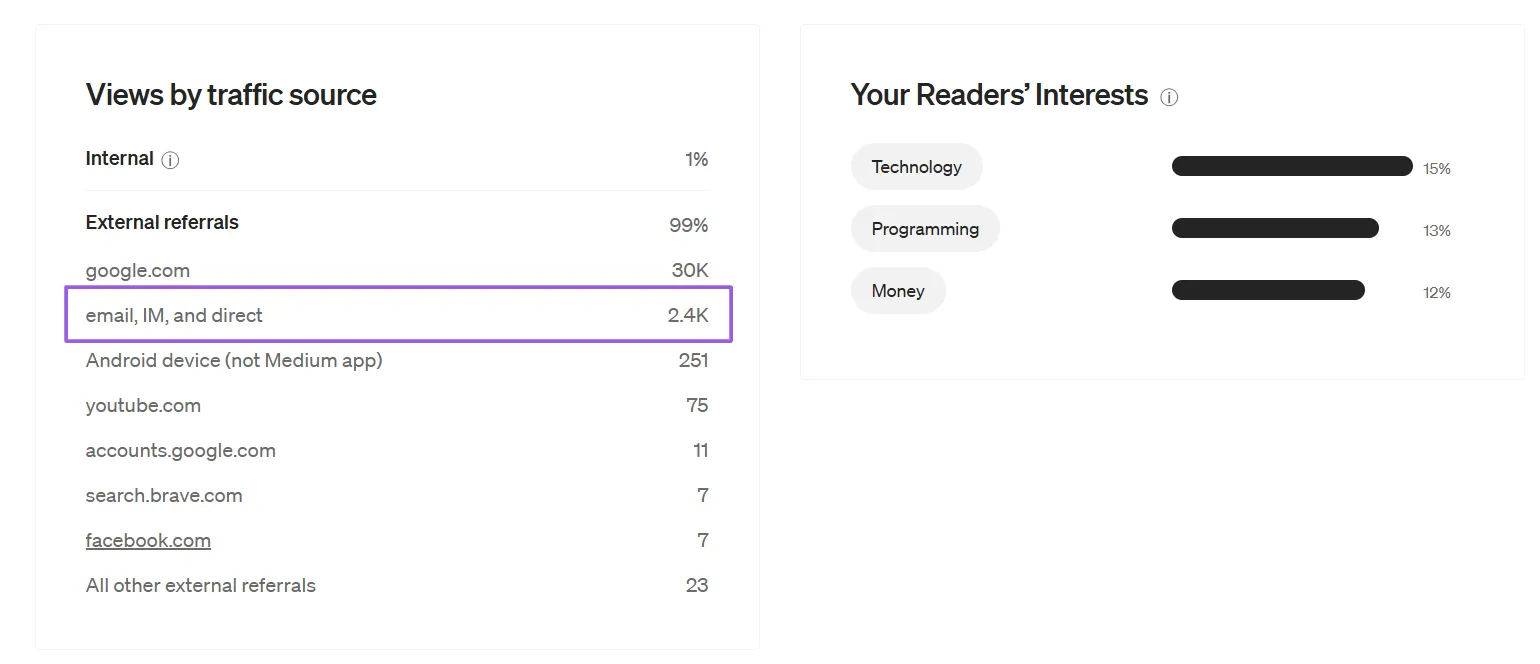
Of those views, over 2,400 readers came from email newsletters and direct traffic alone — proof that platform-native distribution compounds long after you hit publish.
Platform-by-platform strategy
Quora. The most search-integrated of the three. Focus exclusively on questions that already rank in Google — answering those puts your response in front of both Quora's internal audience and organic searchers simultaneously. Quora users spend an average of 8 to 10 minutes per session , and over 54% have a household income exceeding $100K annually — making it one of the highest-quality audiences on the web for B2B and premium consumer niches. Write comprehensive answers that genuinely solve the problem, and link contextually to your site only where it adds real value to the reader.
Medium. Where Quora rewards precision, Medium rewards depth and voice. The platform's largest audience segment is 25–34-year-olds , and they gravitate toward long-form pieces that blend genuine expertise with personal perspective. The most effective Medium strategy for driving referral traffic: republish your best existing blog content as Medium articles (with a canonical tag pointing back to the original), then submit those articles to publications within your niche. A single feature in a publication with 50,000+ followers can drive thousands of referral visits in days.
Reddit. Reddit sees over 1.22 billion global users and averages 5.73 page views per visit — an engagement rate that reflects just how deeply users explore the platform. But Reddit has a near-zero tolerance for self-promotion. The only sustainable approach is to become a genuine contributor to subreddits in your niche first — answering questions, joining discussions, building karma — before ever sharing your own content. When you do share, frame it as a resource that serves the thread, not a promotion. Done right, Reddit can send highly targeted, deeply engaged traffic that converts at rates comparable to email.
Niche communities. Don't overlook the platforms that don't make headlines: Discord servers, Slack communities, Facebook Groups, and industry-specific forums often have smaller but far more concentrated audiences than any of the above. A well-placed answer in an active Discord server of 10,000 professionals in your exact niche can outperform a Quora answer seen by a million generalists.
Principles that apply across all platforms
- Contribute before you promote. On every community platform, trust is the currency. Invest in it before you try to spend it.
- Target questions already ranking in Google. On Quora especially, answering high-ranking questions gives your response two audiences simultaneously: platform users and organic searchers.
- Link contextually, not reflexively. Only link to your site when it genuinely extends the value of your answer. Gratuitous self-linking gets flagged, downvoted, or removed.
- Partner with publications. On both Quora and Medium, submitting to established publications with large followings unlocks newsletter distribution and social amplification you couldn't generate alone.
- Track everything. Use UTM parameters or branded short links on every community link so you know exactly which platforms and posts are driving meaningful traffic — and which aren't worth your time.
The compounding effect: Unlike social media posts that disappear in hours, a strong Quora answer or Medium article continues accumulating views and driving traffic for years. This is one of the few traffic channels where effort today pays dividends indefinitely.
5. Get Social Media Traffic
A strong social media presence is like a well-maintained highway, smoothly sending traffic to your blog or website.
45% of consumers follow brands for enjoyable content, so encourage your audience to create and share content about your brand, whether it's through contests, giveaways, or simply asking for their experiences. This builds trust and provides you with valuable social proof.
According to the findings of the Search Engine Journal , GrowthBadger , and The Economist , Facebook is the best platform for social media referrals. At the same time, X (formerly Twitter) is also a good start.
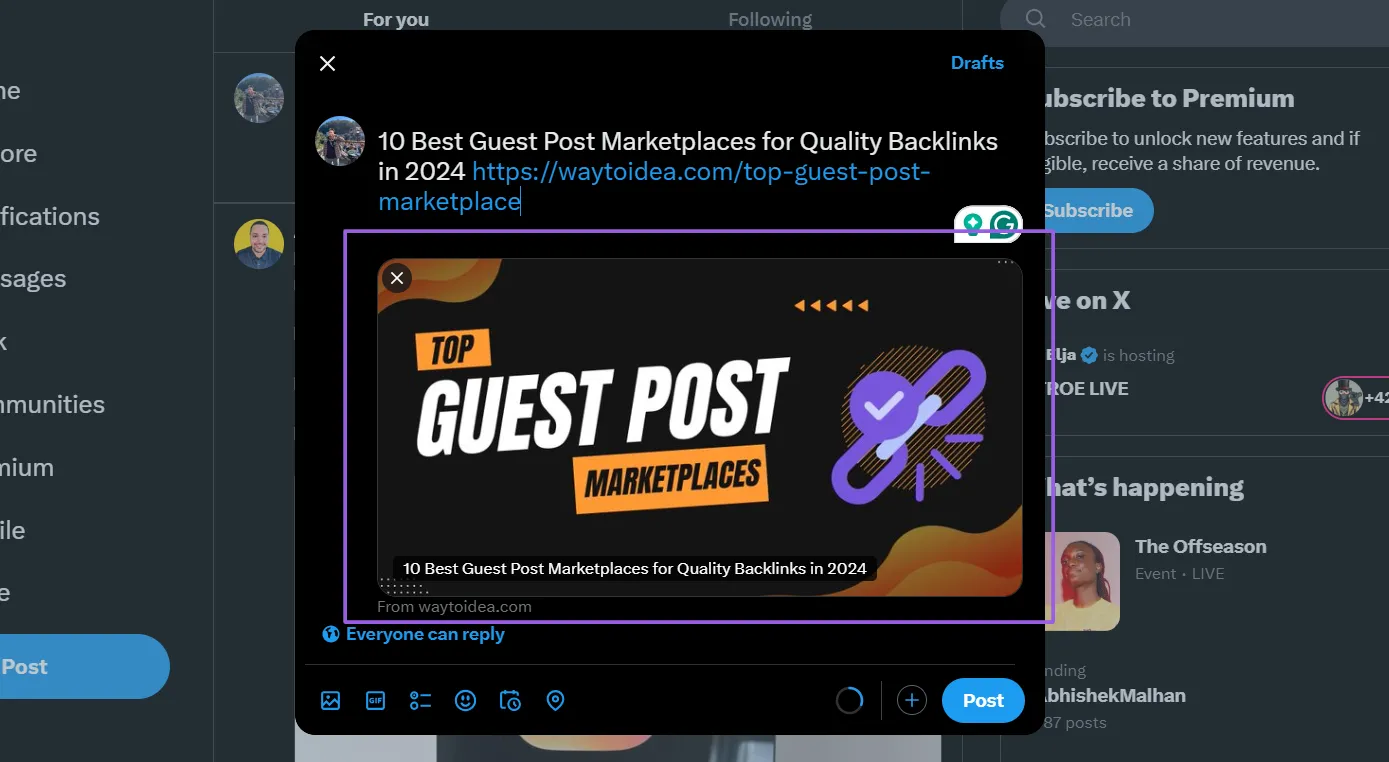
Here Open Graph images play a big role.
Make sure your Open Graph image size is relevant for all social media channels, if you don't know it, here is what I am talking about:
Also, make sure to optimize your social media profiles for search engines by strategically using keywords and hashtags in your bio and posts.
Share high-quality content regularly, Respond to messages, and address customer inquiries efficiently, That's it.
This shows you care about your audience, and you value their time.
Additionally, explore opportunities to connect real-life events to your social media presence.
Create event-specific hashtags, this can help you to go viral.
Partnering with influencers, especially those who have a dedicated following within your target market, can be a powerful way to amplify your reach and drive traffic. Use our guide to choosing the right influencer marketing platform to find partners that align with your niche.
Over 80% of marketers share that influencers are essential to their overall social media strategy.
Finally, streamline your social media efforts by using social media management tools that offer scheduling, analytics tracking, and competitor analysis.
This allows you to focus on creating high-quality content and refining your overall strategy. Want to grow beyond the basics? Read our guide on how to increase your social media presence for a deeper playbook.
6. Guest Publishing on Authoritative Sites
Our next strategy, is one of my favorites, Guest blogging.
Guest blogging is a powerful strategy for driving traffic to your website, building relations, and establishing your brand as an authority in your industry.

But not limited to, A well-executed guest blogging strategy can lead to:
- Increased website traffic through referral links
- Improved search engine rankings through valuable backlinks
- Enhanced brand awareness and authority
- Opportunities to connect with other industry professional
Guest blogging can be a hard nut to crack because you have to go through a bunch of emails and follow-ups to stand out in their mailbox and get a SUGAR response.
Before pitching for a guest blog post, you research their blog posts that have already been published. Pitch them a unique blog post idea that shares value with the audience.
When you write your guest post, make it top-notch! Stuff it full of value and insights, just like you would for your own blog. And don't forget to sprinkle in some links back to your website (inside content is more recommended than the link in the author bio) - that's how you get people clicking over to your blog.
It's essential to research and identify websites and blogs that align with your target audience, ensuring that your content reaches the right people.
However, here we have a comprehensive list of guest blogging sites in various niches.
You can also find guest blogging sites through various methods:
- Search online directories for websites accepting guest contributions.
- Use specific search commands to find relevant blogs:
- "[Your Niche] + write for us"
- "[Your Niche] + submit guest post"
- Look for "guest posting" or "contributed to" sections in the online profiles of companies and bloggers.
- Consider collaborating with influencers in your niche.
- Create a dedicated page on your website inviting guest contributors.
- Browse top guest post marketplaces for paid and free placement opportunities across dozens of niches.
Guest blogging is a marathon, not a sprint. Keep at it consistently, build relationships with other bloggers, and watch your website traffic soar! For advanced techniques, read our guide on advanced backlink building tips.
By consistently publishing valuable content on reputable platforms, you can increase your website traffic, enhance your brand's visibility, and foster a loyal following.
7. Dust Off Outdated Content
This is consistently the fastest and highest-ROI traffic strategy available to any site that has published content for more than six months.
Here's why: ranking an existing post from position 15 to position 5 is dramatically easier than ranking a brand-new post from scratch. You already have links, indexed history, and some authority baked in — you just need to improve the content to close the gap.
Updating an old blog post doesn't mean replacing the whole content, you just have to go through an editorial process to ensure everything is relevant and shares values.
Search engines favor websites that provide relevant, current information, so refreshing your content can positively impact your search rankings and visibility.
Research consistently shows that content updates outperform new content creation on a per-hour basis. One study from Orbit Media found that marketers who regularly update old posts are 2.5x times more likely to see strong results than those who don't.
How to identify posts worth updating:
-
Open Google Search Console and filter for queries where you rank between position 8-20. These are your prime candidates — close enough to page one that an update can push them over.
-
Look for posts that ranked well 12-24 months ago but have declined. Often this is because newer content has overtaken them or the topic has evolved.
-
Check for posts with high impressions but low click-through rates — a sign that the title or meta description needs work, not the content itself.
Here are several techniques to update old content like a pro:
- Identify outdated blog posts: Look for posts that are no longer performing well or contain information that is no longer accurate.
- Overhaul and upgrade old blog posts: Update outdated information, add new insights, incorporate relevant keywords, and improve the overall readability and visual appeal of your posts. For example, you can add new screenshots, refresh content, and give the post a clearer title.
- Fill content gaps: Use content optimization tools to identify relevant keywords and subtopics that your content may be missing. This will help you create more comprehensive and informative content that addresses user search intent.
- Update visuals: Replace outdated images and screenshots with newer ones — use image compression tools to keep file sizes small and page speed fast.
- Republish and re-promote: Treat your refreshed content as new and share it across your social media channels, email lists, and other relevant platforms. Submit your updated sitemap to Google Search Console and read our guide on how to index your website fast to get re-crawled quickly.
Search engines, and readers, appreciate websites that provide up-to-date, relevant information. Dusting off your old content is a great way to keep your audience engaged and improve your site's visibility. Pair content updates with our tips on how to reduce bounce rate to maximize the impact of every refreshed post.
8. Strategic Paid Traffic
Paid traffic gets a bad reputation among content creators, usually because it's done wrong. The common mistake is running traffic to a homepage or generic blog post and expecting conversions. That's expensive and ineffective.
Used correctly, paid traffic accelerates organic growth, fills gaps while SEO matures, and generates measurable ROI. The key is matching the right platform and ad type to the right objective.
Paid traffic channels and how to use them
-
Google Search Ads: Best for capturing high-intent searchers who are ready to act. Work through our Google Ads checklist before launching any campaign to ensure your targeting, bidding, and landing pages are correctly set up. Not ideal for driving traffic to informational blog content — the economics rarely work.
-
Meta Ads (Facebook and Instagram): Exceptional for audience building, content promotion, and top-of-funnel awareness. Use them to promote your best content to lookalike audiences or to drive email subscribers. The creative (image or video) does most of the heavy lifting — invest in it.
-
YouTube Ads: Underused and often underpriced. In-feed ads (appearing in search results) work well for promoting video content to relevant audiences. Skippable in-stream ads are better for brand awareness.
-
Retargeting: The most efficient paid channel for most websites. Retargeting ads re-engage visitors who've already been on your site — people who already know you exist. Even a small retargeting budget can meaningfully improve conversion rates.
-
Reddit Ads: Highly underrated for niche B2B and enthusiast audiences. Subreddit targeting puts your message in front of exactly the communities most likely to care about your content.
The right approach: Start paid traffic small (even $5-10/day), test rigorously, and only scale what's demonstrably working. Understanding inbound marketing principles will help you align paid campaigns with your broader digital marketing strategies for compounding results. The goal of paid traffic for most content sites should be list building and content amplification — not direct monetization from ad traffic.
9. Email Marketing — The Audience You Own
To effectively increase website traffic with an email newsletter, build an email list, and consistently provide valuable content, including informative blog posts, how-to guides, ebooks, webinars, and engaging videos.
Offer exclusive discounts, promotions, early access to new products or services, and showcase original user-generated content.
Include signup forms on your website, particularly on high-traffic pages or blog posts for more exposure. Read our guide on how to increase blog engagement to maximize subscriber conversions from your existing content.
Sender, Brevo, and Mailjet are free mail services to collect emails through newsletters and send emails, you can get started with a free account with some limits.
But here is a catch,
The open rate of emails is between 15% and 25% only across industries. So make sure you optimize email subject lines with compelling language — use power words to stand out in crowded inboxes — and use clear CTAs to guide subscribers to specific landing pages or blog posts on your website.
You can use clear and enticing CTAs like, Read the full article, Download our free guide, Get your exclusive discount, Register for our upcoming webinar, and more.
Ensure:
- Never spam your subscribers: Focus on providing valuable content and respecting their inboxes.
- Make it easy to unsubscribe: Provide clear instructions on how to opt out of your emails.
10. Search Engine Optimization
Other methods may give you temporary website traffic but SEO will boost your ranking in SERPs.
You can generate substantial traffic from SEO alone.
It's a complex field with many factors to consider, but the core principles are simple: create high-quality content that satisfies user intent, use relevant keywords, and build a technically sound website that is easy for search engines to crawl and index.
SEO is the process of increasing organic traffic through various techniques, including:
- Keyword Research: Keyword research is crucial for any SEO strategy. By using keyword research tools, you can identify the best keywords for your website and create a content strategy that will help you rank higher in search results and attract more website visitors. SEO Tools like SEMrush, Ahrefs, Google Search Console, Moz Keyword Explorer, and Ubersuggest can help you uncover relevant keywords, their search volume, and their competition level.
- On-Page Optimisation: This refers to optimizing elements within your website to make it more appealing to search engines. This includes:
- Content Optimization: Creating high-quality, relevant, and engaging content that includes target keywords naturally.
- Technical SEO: Ensuring your website has a solid technical foundation. This includes optimizing your website's loading speed, ensuring it's mobile-friendly, and using structured data to help search engines understand your content.
- Optimising Meta Description and Title Tag: Crafting compelling meta description and title tag that entice users to click on your website in search results.
- Optimizing URLs: Including target keywords in your URLs to improve relevance and user experience.
- Using Internal Linking: Strategically placing internal links within your content to guide users to other relevant pages on your website and improve site navigation.
- Off-Page Optimization: This involves activities conducted outside your website to build credibility and authority, which can positively influence search engine rankings. This includes:
- Link Building: Earn high-quality backlinks from other reputable websites in your niche. Use free backlink checker tools to audit your existing profile and identify gaps, and read our guide on broken link building for a high-converting outreach strategy.
- Social Media Marketing: Engaging on social media platforms to increase brand visibility, promote content, and drive more traffic to your website.
SEO is not a day game.
It requires continuous monitoring, analysis, and adjustments to stay ahead of Google ranking factors and algorithm updates to maintain optimal search engine rankings.
By investing in SEO, businesses can establish a strong online presence, attract more qualified leads, and achieve sustainable long-term growth. Use the best WordPress SEO plugins to automate much of the technical groundwork, and work through our detailed SEO checklist to make sure nothing falls through the cracks.
11. Online Directory Listings
Directories listing is a free method of driving traffic to your website.
Hundreds of directories still attract traffic and offer value to websites and businesses.
Directories such as BOTW, AboutUs, Google Business Profile, and Yelp have gained importance. These platforms allow websites of all types to be submitted and discussed:
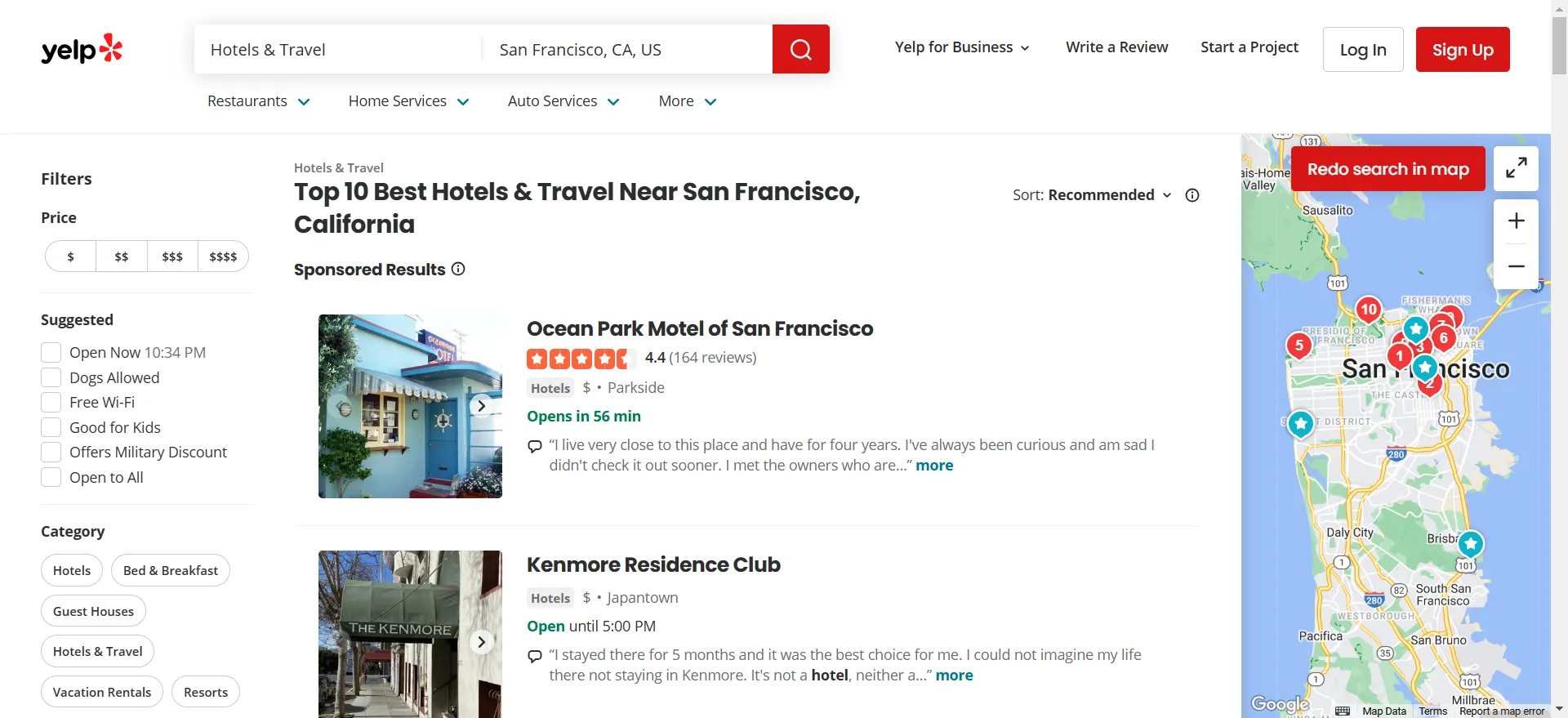
A significant advantage of online directory listings is that many, like Yelp , have strong domain authority on Google, meaning your business's free page on these sites could rank highly for relevant searches.
They allow you to manage your listings and analyze their performance with local SEO tools.
Getting listed in online directories can increase traffic to your website. Your profile on most of these sites will include a link to your website. Actively updating these listings and getting positive reviews will likely increase website traffic.
Online directories can help your business get found when people search for services online. They are particularly beneficial for specific sectors such as healthcare, home services, retail, professional services, travel and entertainment, and multi-location businesses. Read our guide on why local SEO matters to understand how to prioritize listings for maximum impact.
💡: Find out Free Directory Submission Sites List. You can also use profile creation sites to build your web presence across multiple platforms simultaneously.
12. Partner With Other Content Creators
The next method I have used to increase website traffic is to partner with other content creators.
Have you thought about co-hosting blog content? All the things where I'll go and I'll create content with other people, and we'll do it on a similar topic.
So, for example, we may do a joint webinar or a joint podcast. We may even do roundup posts. We may even do interviews with other people.
By partnering with other content creators, you'll find that they'll promote the content, and you'll promote the content as well. But you may be like Vishal, and I don't have any traffic to my site. That's okay.
That's why I also gave you options to interview people and do roundup posts because people are always flattered to be interviewed.
People are always flattered to be included in a roundup post. And you know what, when you have X person in these posts, what are they going to do when it gets published?
They're going to share it. When they share it on their favorite social site, what happens, your site will get more traffic.
And yeah, you may find that all of the experts may not share the content, but if you email asking them to, a large portion will. I'm talking about 30%, 40% plus.
When people interview me and ask me to share the content, I almost always share it. Giveaways, contests, or promotions.
Look, reach out to other websites in your niche, offer them something valuable to their audience, and they'll spread the word.
You can also use content syndication to republish your collaborative content on other platforms — extending its reach without duplicating your effort.
When they do, your website traffic will increase.
Conclusion: How to Increase Website Traffic in 2026
There's no single strategy that will transform your traffic overnight. Every site that consistently grows its audience does so by picking a focused set of channels, executing them with discipline, and compounding results over time — not by chasing every tactic at once.
Here's a simple framework based on where you are right now:
If you're starting from zero: Prioritize topical authority and content quality above everything else. If you haven't yet, read our step-by-step guide on how to start a blog. Pair that with guest publishing for early backlinks and start building your email list from day one. Don't spread yourself thin — depth beats breadth at this stage.
If you're stuck at a traffic plateau: Run a content audit and identify your highest-potential existing posts. Updating and re-promoting those is your fastest win. Then layer in technical SEO, one social platform, and community-driven channels like Reddit and Quora.
If you're scaling an established site: This is when AI search optimization, digital PR, paid amplification, and content partnerships start delivering outsized returns. Work on increasing your domain authority systematically — it's the rising tide that lifts all your content's rankings. The foundations are already in place — now it's about compounding them.
Regardless of where you are, three principles hold across every stage:
- Consistency beats intensity. Publishing one well-researched post per week for a year outperforms a burst of twenty posts followed by silence.
- Measure what matters. Organic sessions, email signups, keyword rankings, and conversion rates tell you whether your strategy is working. Vanity metrics don't. Use our detailed SEO checklist to audit performance every 90 days.
- Revisit and refresh. The sites winning in search in 2026 treat content as an asset to maintain, not a task to complete. Your best posts from two years ago may be your biggest traffic opportunities today — if you update them.
The strategies in this guide work. But they work for the people who implement consistently, not the people who read and move on.
Pick two or three strategies that fit your current stage. Start this week. Measure after 90 days. Build from there.
Have a question about any of these strategies or want advice on where to focus for your specific site? Drop it in the comments — I read and respond to every one.
Frequently Asked Questions
How long does it take to increase website traffic?
For SEO-driven strategies, expect 3-6 months before seeing meaningful organic traffic growth. Technical improvements and content updates on existing pages can show results faster — sometimes within weeks. Paid traffic and email campaigns can drive results immediately, but require ongoing investment.
What is the fastest way to get website traffic?
Paid advertising (Google Ads, Meta Ads) delivers the fastest results — traffic can start the same day. For free strategies, updating high-potential existing content and promoting it through your existing channels (email, social) is typically the fastest path to a meaningful traffic lift.
Does social media actually drive significant website traffic?
It depends heavily on the platform and niche. Pinterest consistently drives strong referral traffic for certain content categories. LinkedIn is excellent for B2B. Most other platforms have reduced external link distribution significantly in recent years, meaning social is better for audience building and brand awareness than direct traffic generation — unless you're very deliberate about conversion funnels.
How important is website speed for traffic?
Very. Page speed affects both SEO rankings (Core Web Vitals are a ranking signal) and user behavior — slow pages have higher bounce rates, meaning even traffic you do attract doesn't stay. Google's PageSpeed Insights is free and gives specific, actionable recommendations.
What is the best free traffic source?
Organic search (SEO) is the best free traffic source for most websites — it's the most scalable and the most passive once established. Email is the best free source for repeat, loyal traffic. The right answer depends on your niche, content type, and how much time you can invest in each channel.
Have a question about a specific strategy? Drop it in the comments — I'll give you a straight answer.

Founder @ WayToIdea
Founder @ WayToIdea
Vishal Meena is an SEO specialist and the founder of WayToIdea. Since starting his journey in 2019, he has helped 96+ clients across the US, UK, and India grow through technical SEO and data-driven strategies. With a background in Mathematics and digital marketing form Harvard Business School, he approaches search like a system to be analyzed, optimized, and scaled.
Loading comments...